
Revised Written Estimate Form – Mover Docx
FMCSA Mandated Compliance

Revised Written Estimate

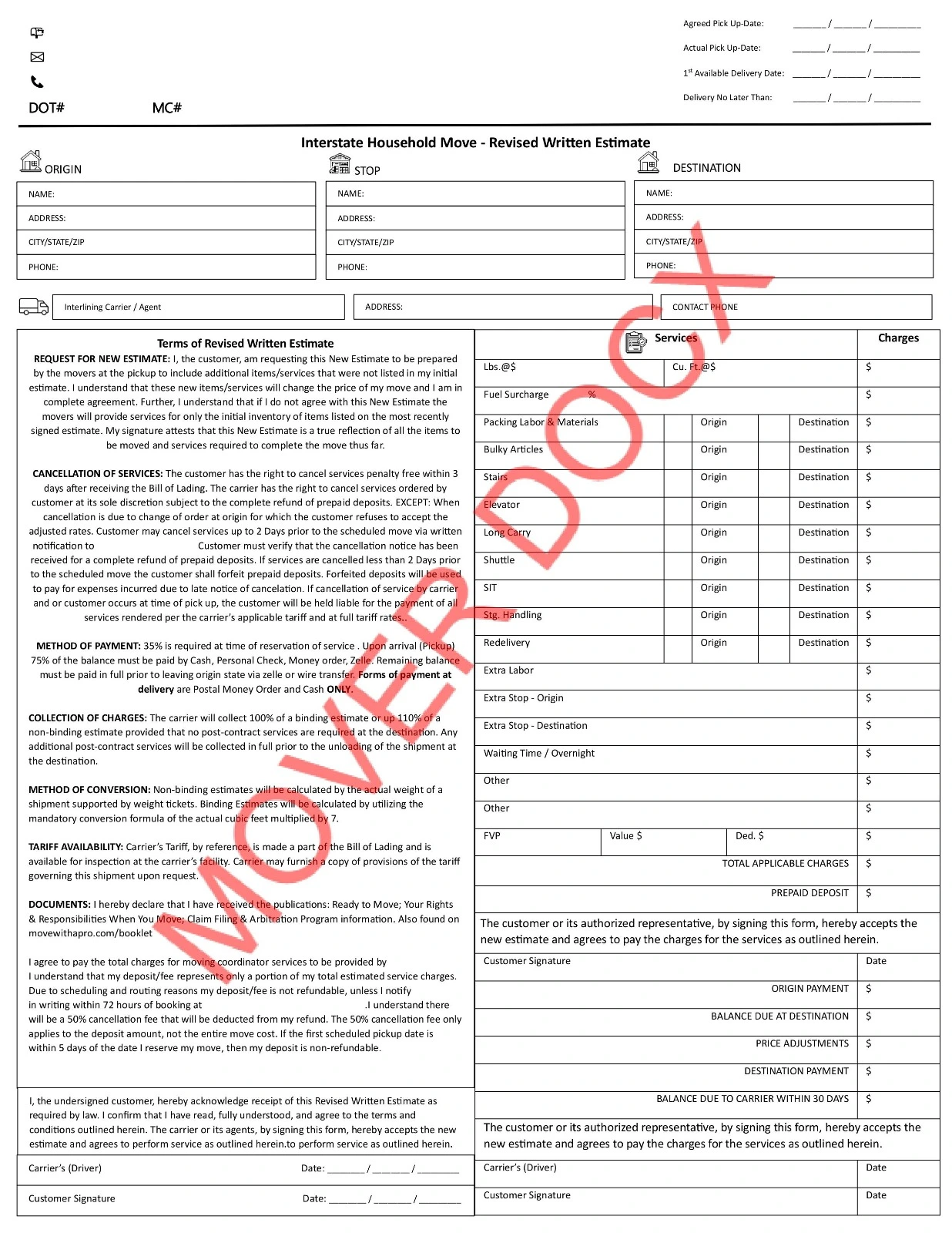
The federally compliant form required to legally secure customer acceptance of new charges or services added after the initial written estimate has been signed, protecting your revenue.

Sample of a Revised Written Estimate Form for interstate moving companies

Secure Revised Charges

Obtain the required signature for all changes to the original estimate, preventing payment disputes.

Federal Disclosure Ready

Includes all mandatory cancellation, payment, and tariff clauses required by FMCSA regulations.

Must Be Signed Before Loading

Designed to be executed prior to loading the shipment, ensuring compliance and preventing delays.

Lock In Final Charges Before Moving Day

See why this form is essential for a smooth, compliant move.

“This revised estimate is clear, compliant, and legally sound. It prevents ‘bait-and-switch’ arguments and secures the new charges upfront when the scope of work changes.”

Sarah J.

VP of Operations, Global Van Lines

“A must-have when the customer adds items or services after the initial survey. It protects our pricing and ensures full customer understanding of the revised, and often higher, cost.”

Robert A.

Certified Moving Consultant

“It provides all the cancellation clauses, tariffs, and payment details required by FMCSA, all in one compliant document. It’s the only one we use now for revisions.”

Linda M.

Compliance Officer, Reliable Moving

“We use a digital version of this form on the truck. It ensures we have a signed agreement on the updated charges before the job even begins. It’s a lifesaver for last-minute additions.”

George K.

Interstate Logistics Director

“The structure of the form clearly shows the original estimate and the new total, making it easy for the customer to understand exactly what changed and why. Highly recommended for professionalism.”

Daniel P.

Moving Technology Specialist

“Before using this, we had issues with customers arguing about final costs. Now, we use this revised form, and the signed acknowledgement eliminates all uncertainty on move day.”

Maria T.

Owner, Patriot Movers

“The legal text is solid. It reinforces the non-binding nature of the estimate and clearly states all the financial and legal responsibilities of the shipper. Great work.”

Mark H.

Legal Counsel, MoveCorp

“By making it clear that a new agreement on costs must be signed, it makes our team look more professional and seriously committed to compliance. This form is a revenue protector.”

Ian B.

Claims Manager, Star Movers

“The easiest and most compliant revised estimate form we’ve found to integrate into our digital quoting system. It’s a great peace of mind document for our sales team.”

Jessica S.

Owner, Coastline Moving

“This form is exactly what the FMCSA wants to see—a clear, written agreement for charges after the initial estimate. Using this has made our compliance audits much smoother.”

Kyle W.

Compliance Analyst, SafeMove

Share Your Experience

Help other movers by leaving a review of our legal documents and forms.

Revised Written Estimate – FAQ

Common questions about securing new charges and FMCSA compliance.

It is a federally mandated document used to update the original written estimate when new services, items, or conditions change the expected cost of an interstate move. It ensures full transparency and customer agreement before the move begins.
This form is required anytime there is a change to the terms or charges of the original estimate, especially if the customer adds items, requests new services (like packing), or changes the destination. It must be completed and signed before the shipment is loaded.
Yes, this template includes all the mandated clauses, including the right to request a new estimate, **cancellation of services terms**, method of payment requirements, and **collection of charges**.
Yes. As long as the electronic signature system meets legal requirements for binding contracts, a digital signature on this revised written estimate is legally valid and is often preferred for rapid compliance and record-keeping.
It protects the company by obtaining the customer’s written consent and signature on the new, potentially higher charges. This prevents disputes and refusal to pay based on claims that the final cost was not properly disclosed.